Your Cart is Empty

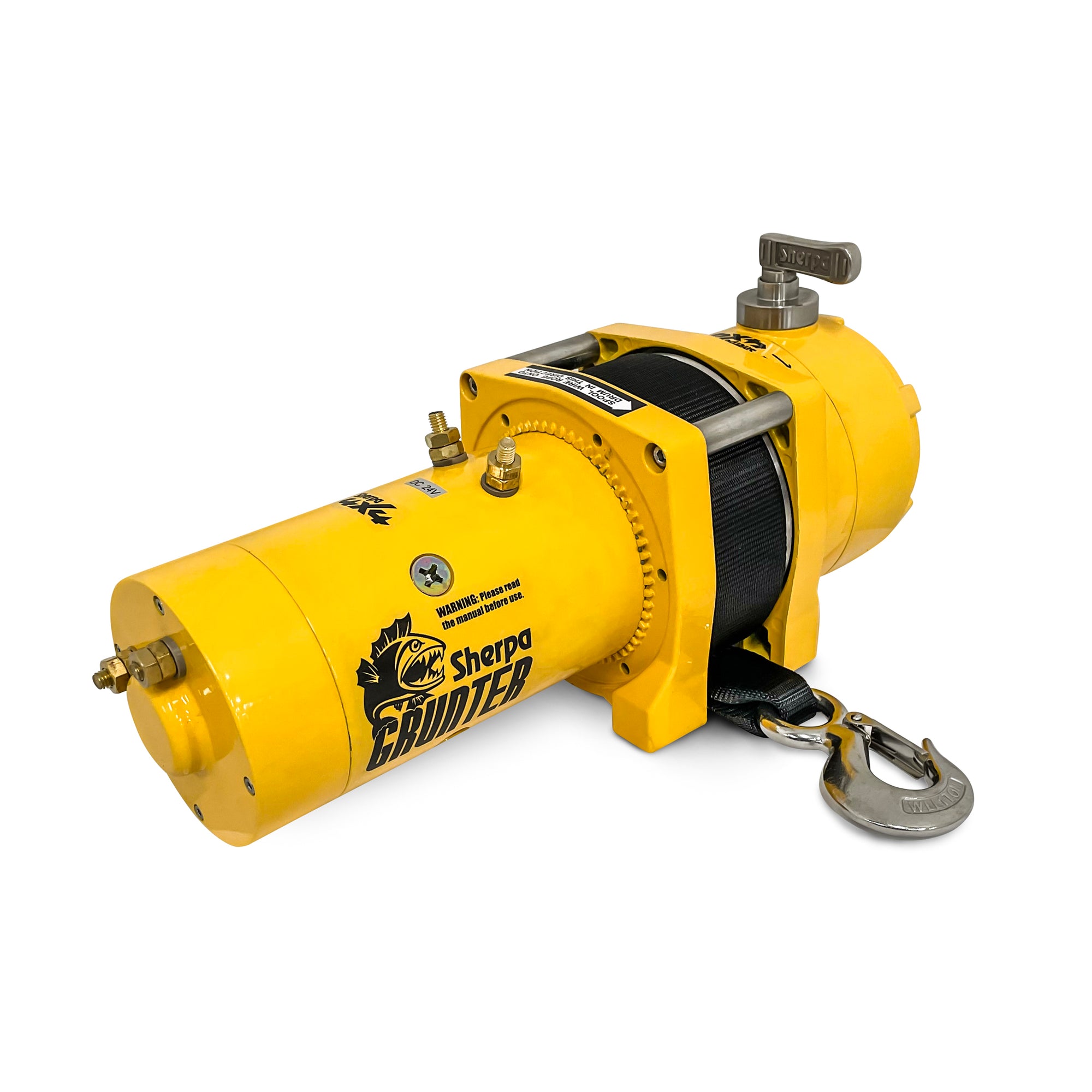
Sherpa 4x4 winches also design and manufacture a dedicated boat trailer winch - the Sherpa Grunter. This powerful boat trailer winch is designed with sole purpose of winching boats and vehicles onto trailers. The custom, heavy duty design provides a strong and reliable winch for large maritime applications.
The Grunter comes standard with a genuine Albright solenoid, 316 stainless steel fitting and 10m of webbing to suit most boats & vehicles. This boat trailer winch is IP68 rated and available in 12V or 24V. When power is what you are looking for - look no further than the Sherpa Grunter Boat Trailer winch. Free Shipping in Canada.
SEE WHAT OUR CUSTOMERS HAVE TO SAY!
Unfortunately I have not had a chance to try it out but I was impressed with the size of the winch and how adjustable the clutch lever position is. Shipping was really fast and the quality of packaging and the winch itself are excellent. Customer support is lightning fast and able to answer all my questions. Great doing business with people that don’t want to rob me with tarrifs. Thanks Sherpa 4X4!
I purchased the Sherpa Winch to put on my tri-axle boat trailer. I have a 26 ft boat that weighs about 8000 lbs. The trailer has a combination of rollers and bunks. Loading the boat in the spring when there is lots of water on Lake Ontario is easy. In the fall when the water drops and you can't get your trailer deep enough it is a real challenge for a winch. I burnt out my last winch even when I applied lubricant to the bunk carpets. I did run heavy electrical cables from the battery to the back of the truck and used a pair of heavy cables from the truck to the winch to be sure I had lots of power. When I hooked up the boat the winch did not even hesitate. The last 4 feet when the boat is no longer floating is the real test. The winch never even groaned. It has enough power I could have pulled the boat up the trailer dry. I would definitely recommend this winch to any one who needs a great reliable winch for their boat.
Will by again
I’m a lucky guy.
Satisfied and its exactly what I was expecdting .
Sherpa 'Colt' - 12,000Lb Winch
Sherpa Air Compressor (BOX-AIR)
Seems we’ll build haven’t used it yet
The whole interaction with Sherpa Winches was terrific from start to finish! The customer service answered all of my questions before I committed to the purchase. The winch arrived on time and in perfect condition and was a breeze to install.
Won't be installing until April 2026. But all looks like very good quality!! Also Five Star.
BEST ELECTRIC WINCH I HAVE EVER WORKED WITH.
Good
Works good for everything I’ve used it for so far
These guys are pro's....and are great to deal with...plus such high quality products...Thankyou !
I got this winch and it came with all the necessary parts to install it, the winch is very powerful and you can definitely pull a boat onto a trailer with no problems